Monkey bars have been a playground favourite for generations, helping children build strength, coordination, and confidence through active play. But where did they come from?
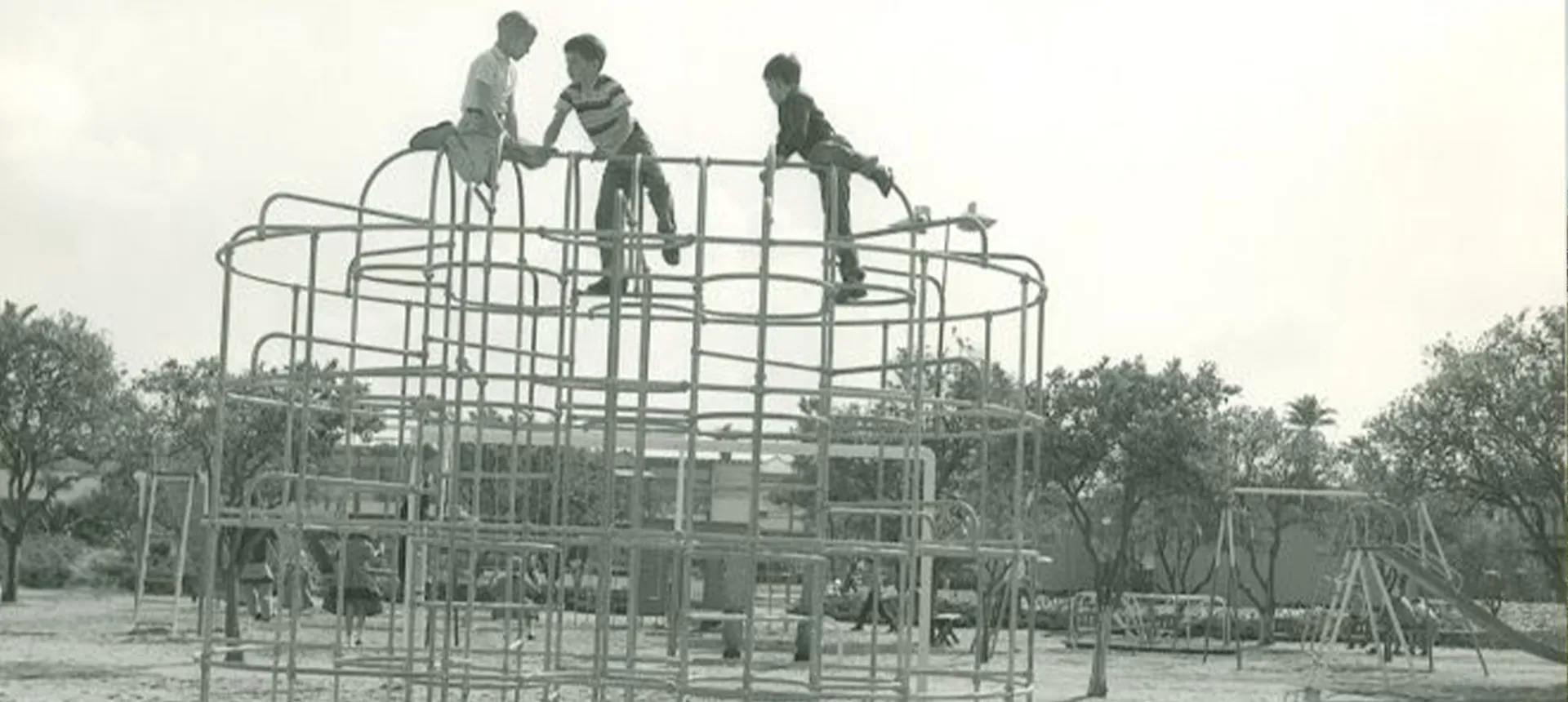
The origins of monkey bars can be traced back to the early 20th century, when playground designers and physical education experts began introducing climbing equipment to encourage children's fitness and development. Inspired by gymnastic apparatus a series of horizontal bars was created that allowed children to swing hand-over-hand from one end to the other.
The name "monkey bars" comes from the way children move across the structure, resembling (you guessed it!) monkeys swinging through trees. As public playgrounds became more common throughout the 1920s and 1930s, monkey bars quickly became a standard feature due to their simplicity, durability, and developmental benefits.
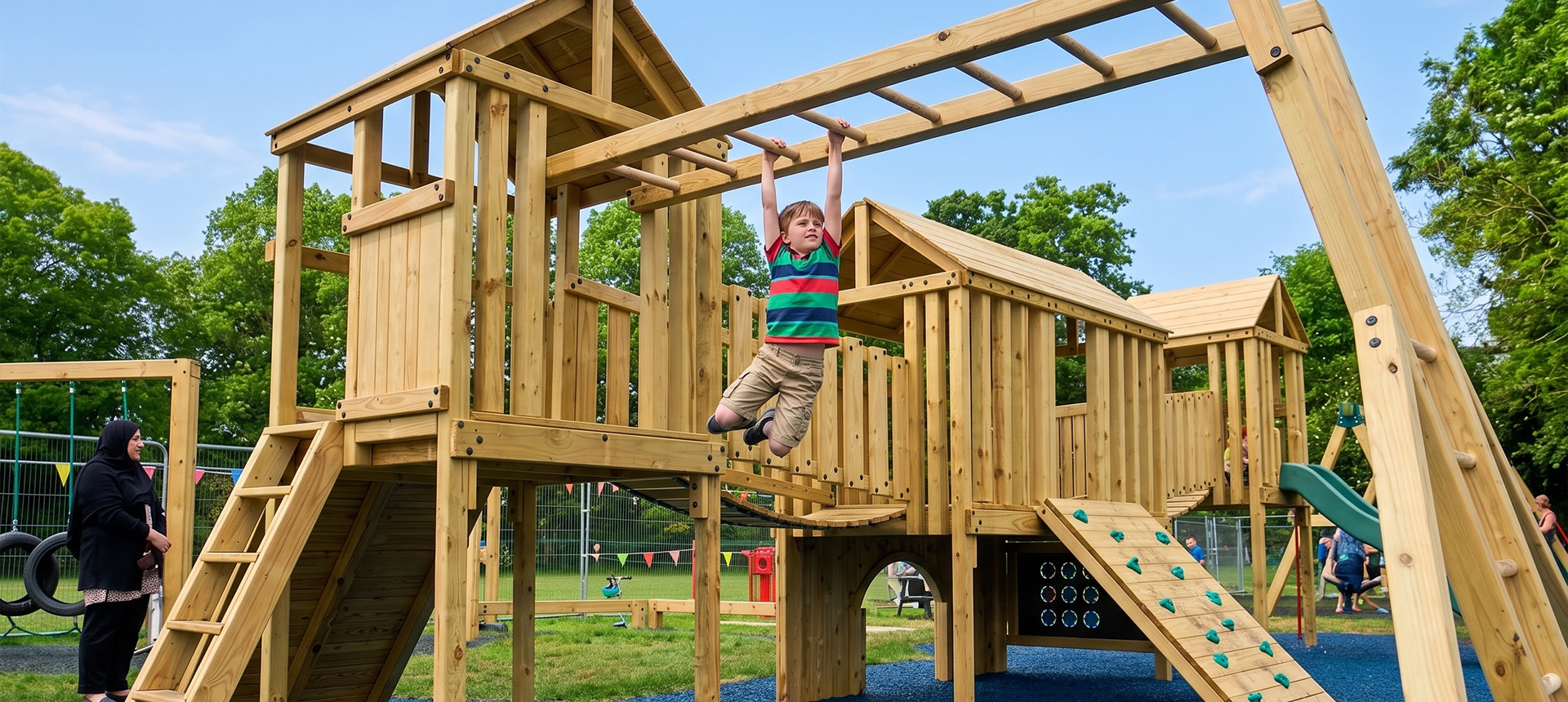
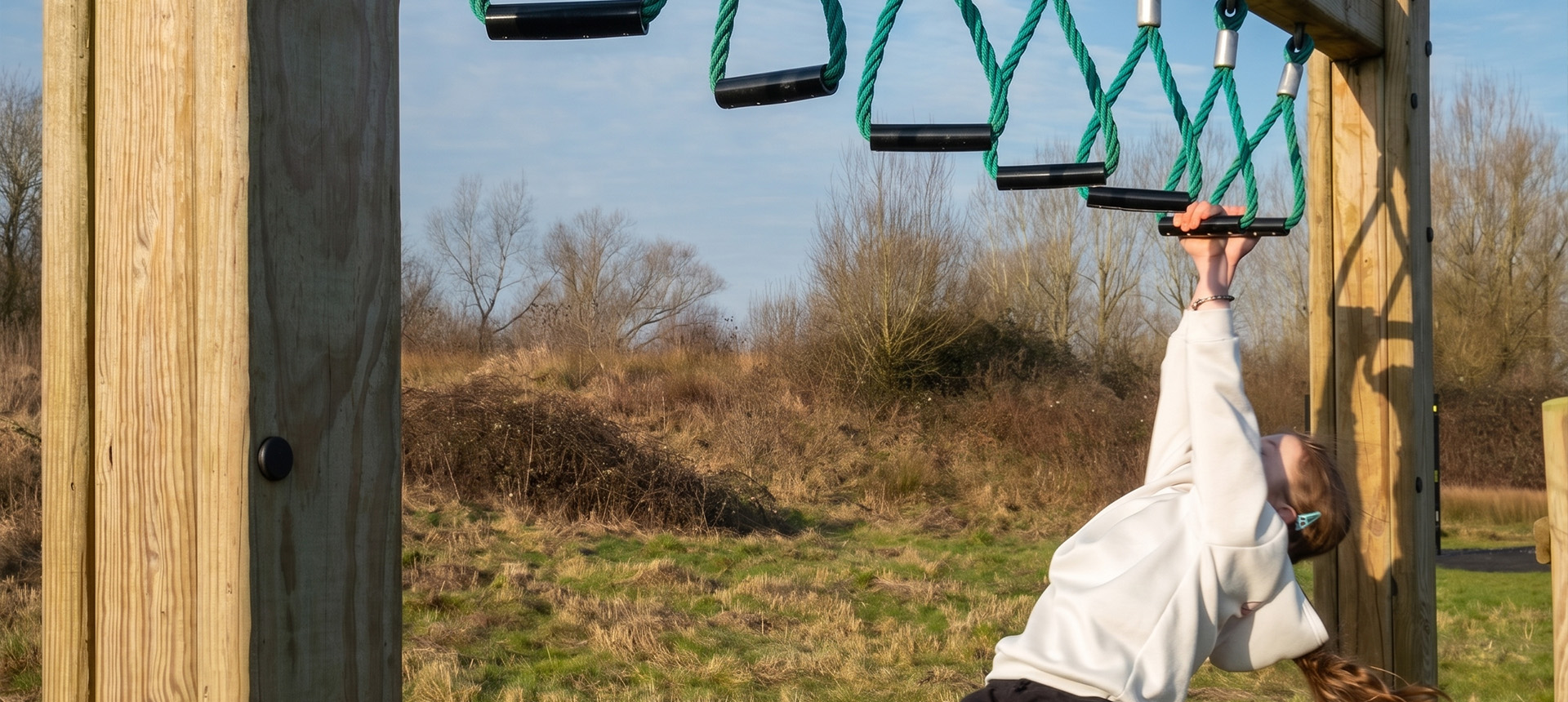
Over the decades, monkey bars have evolved in both design and safety. Modern versions often include curved frames, varied grip heights, rope elements, and integrated climbing features. Playground safety standards have also led to improved materials and impact-absorbing surfaces beneath equipment.
Today, monkey bars remain one of the most popular pieces of playground equipment. Beyond being great fun, they help children develop upper-body strength, grip control, balance, and perseverance. Whether found in school playgrounds, public parks, or garden climbing frames, monkey bars continue to inspire children to climb, swing, and explore.
At Home Front Outdoor Play, we believe outdoor play equipment should create opportunities for adventure while supporting healthy physical development. Monkey bars are a timeless example of how simple design can provide endless opportunities for fun, challenge, and memorable childhood experiences.