For Early Years educators, the playground isn’t just a place to "let off steam"; it is an outdoor classroom. The Early Years Foundation Stage (EYFS) statutory framework places a heavy emphasis on "learning through play," and our timber play trails are designed to be the ultimate tool for this mission.
By integrating the 7 areas of learning, our trails transform outdoor spaces into developmental hubs. Here are five ways Home Front Play Trails meet EYFS requirements.
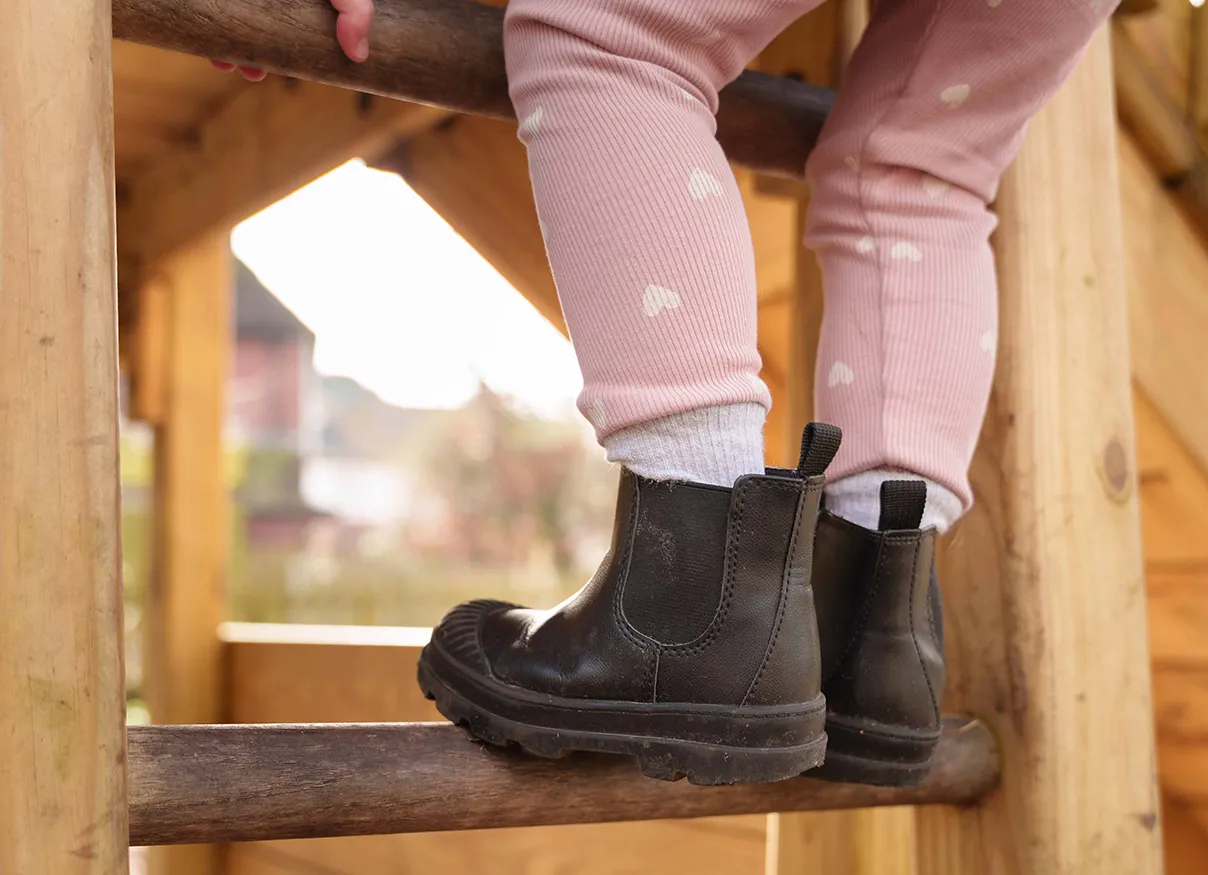
The EYFS framework identifies physical development as a prime area. Our trails, featuring elements like the Wobble Bridge, Monkey Bars, and Traverse Walls, are specifically engineered to develop:
Gross motor skills: Climbing, balancing, and swinging build core strength and agility.
Fine motor skills: Gripping ropes and navigating small footholds on our Rock Walls strengthens the hand-eye coordination essential for early literacy and using a pencil.
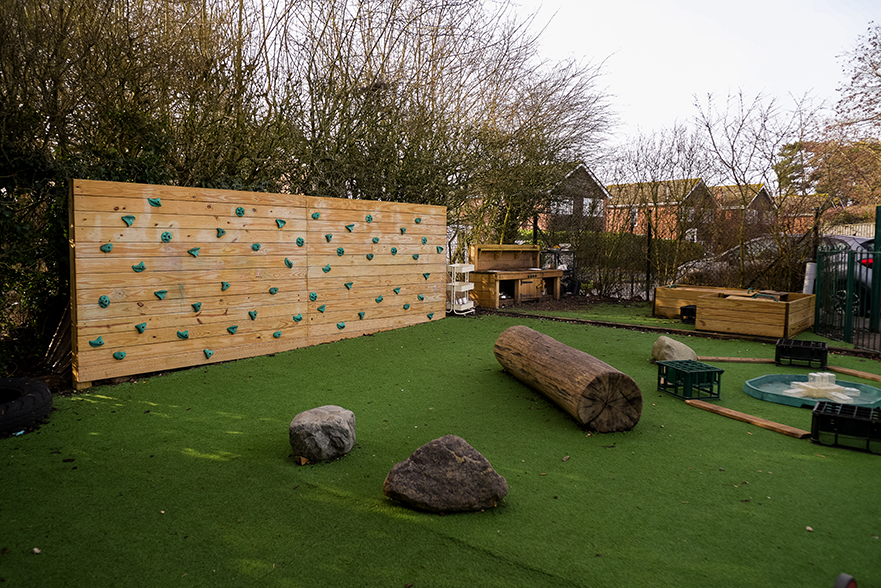
Language comprehension and "back-and-forth" interaction are vital. A play trail acts as a social catalyst. Whether children are navigating the Tyre Crossing together or waiting their turn at the Stepping Stones, they are forced to:
Negotiate and Collaborate: "I’ll go first, then you follow!"
Expand Vocabulary: Using prepositional language (over, under, through, across) in a real-world context makes "understanding the world" tangible.
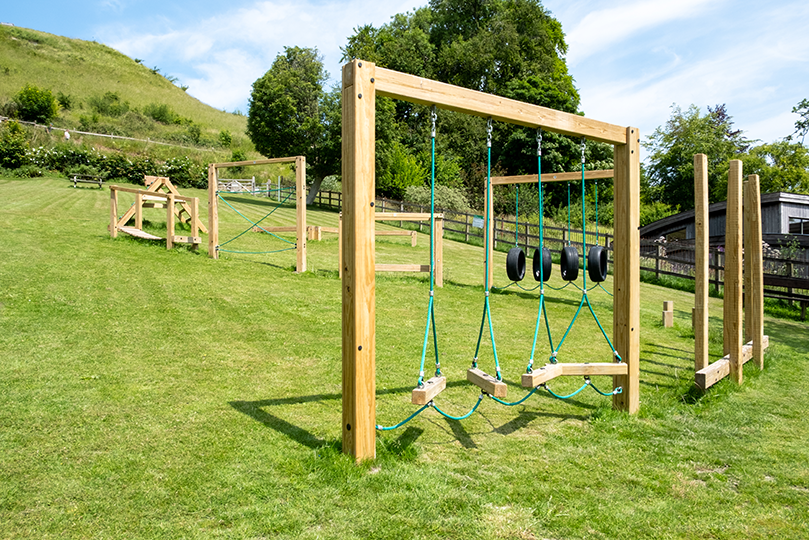
EYFS requires settings to help children develop a "can-do" attitude and manage risks.
Self-regulation & confidence: Completing a challenging section like the Crossover Rope Walk provides a massive boost to self-esteem.
Managing risks: Our trails allow for "risky play" in a controlled environment, teaching children how to assess their own physical limits and build resilience when they don't succeed on the first try.
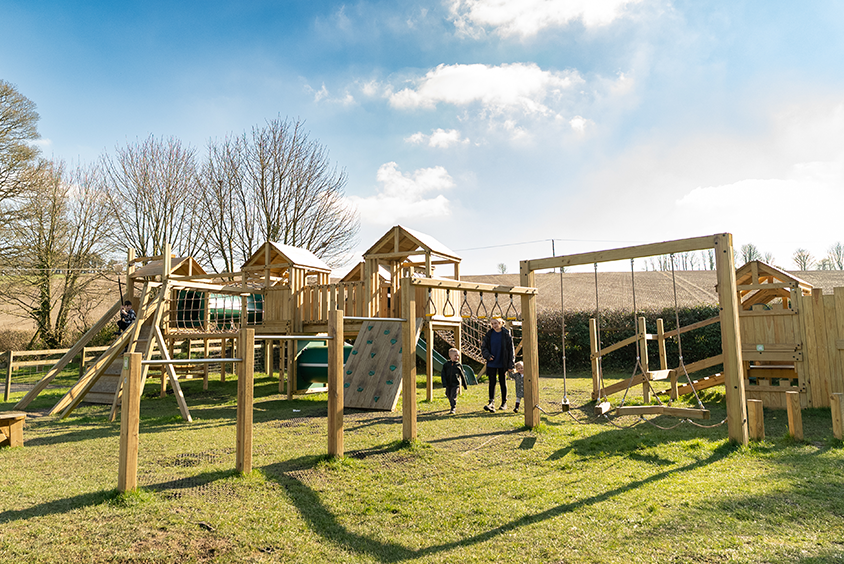
It might not seem obvious, but a play trail is a math and literacy playground.
Mathematics: Children naturally count steps, measure distances, and recognise patterns (zig-zag beams vs. straight logs) as they play.
Literacy: Play trails often become the setting for elaborate stories. Today it’s a bridge over a "lava" river; tomorrow it’s a path through a dragon’s lair. This imaginative role-play is the foundation of narrative structure and storytelling.
The EYFS isn't just about what children learn, but how they learn. Our trails are designed to spark the three characteristics of effective teaching and learning:
Our play trails are modular, meaning you can build a bespoke environment that perfectly matches the age and ability of your pupils.
Get a quote or view our brochure to see how we can help you hit your EYFS targets through the power of play.