Few pieces of playground equipment are as instantly recognisable, or as universally loved, as the slide. From a simple wooden plank to the smooth sculptures we know today, the slide has definitely evolved, yet its purpose remains unchanged: pure, joyful movement.

Early versions of the slide date back as far as the 17th century, when wooden slides were used practically such as to help people descend from structures like castle turrets or mount and dismount horses more easily.
The transition into play came much later. During the early 1900s, slides began appearing in public spaces. One of the earliest recorded playground slides was installed in Washington, D.C. around 1902, closely followed by amusement versions like the bamboo slide at Coney Island in 1903.
Around the same time, rooftop playgrounds in New York and a slide built for Russian royalty showed how the idea was spreading globally. In the UK, the slide took a major step forward in 1922, with a large wooden slide in Wicksteed Park.
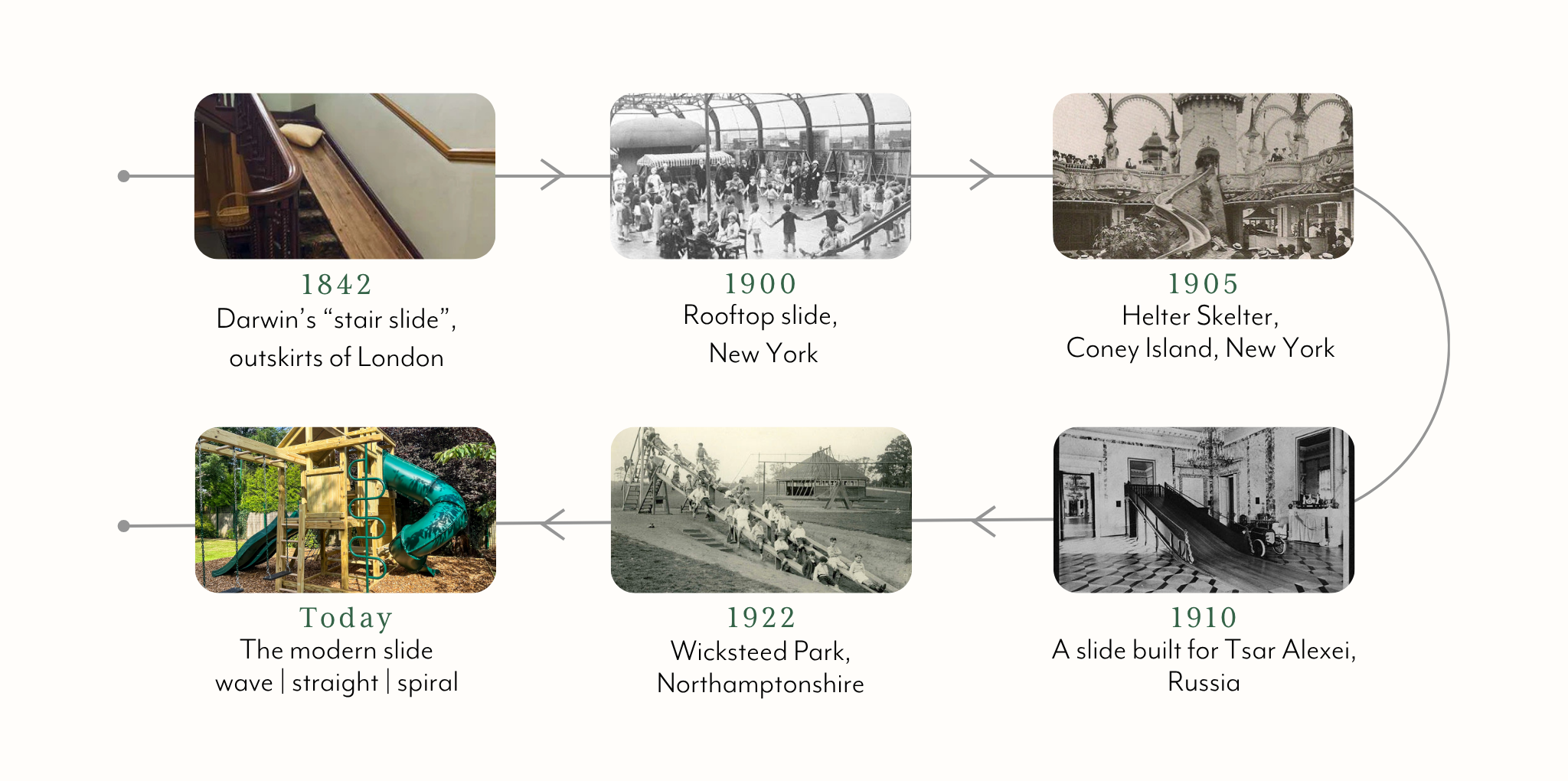
Historical imagery from Bolder Play
Early playground slides were often simple… and sometimes brutal. Long timber planks without sides, steep angles, and minimal safety considerations were common.
As playgrounds developed through the mid-20th century, materials evolved:
Wood gave way to metal, creating faster, taller, more thrilling slides. By the late 20th century, plastic and moulded materials became the standard, improving safety, durability, and design flexibility.
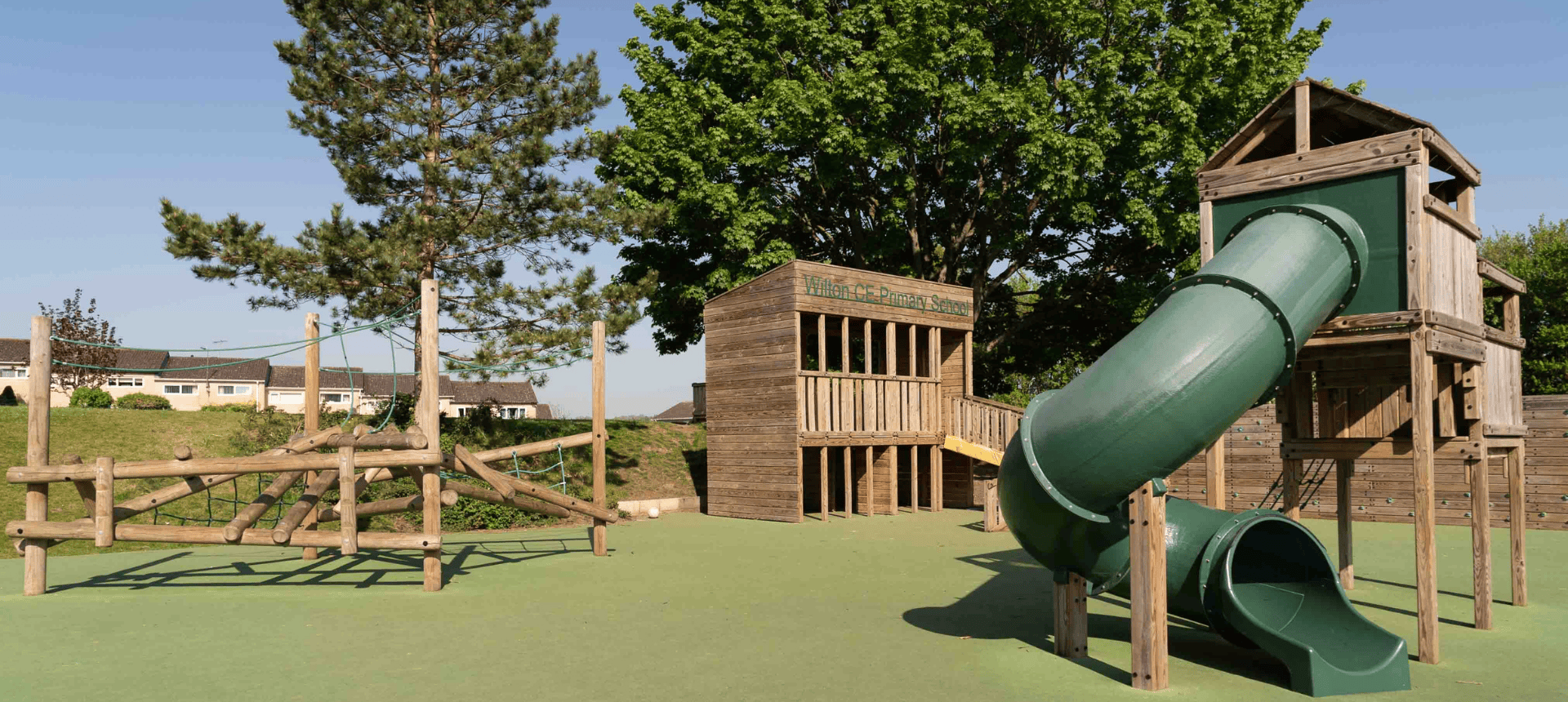
This shift also allowed slides to take on new forms (such as spirals, waves, and enclosed tubes), transforming them from simple descents into full play experiences.
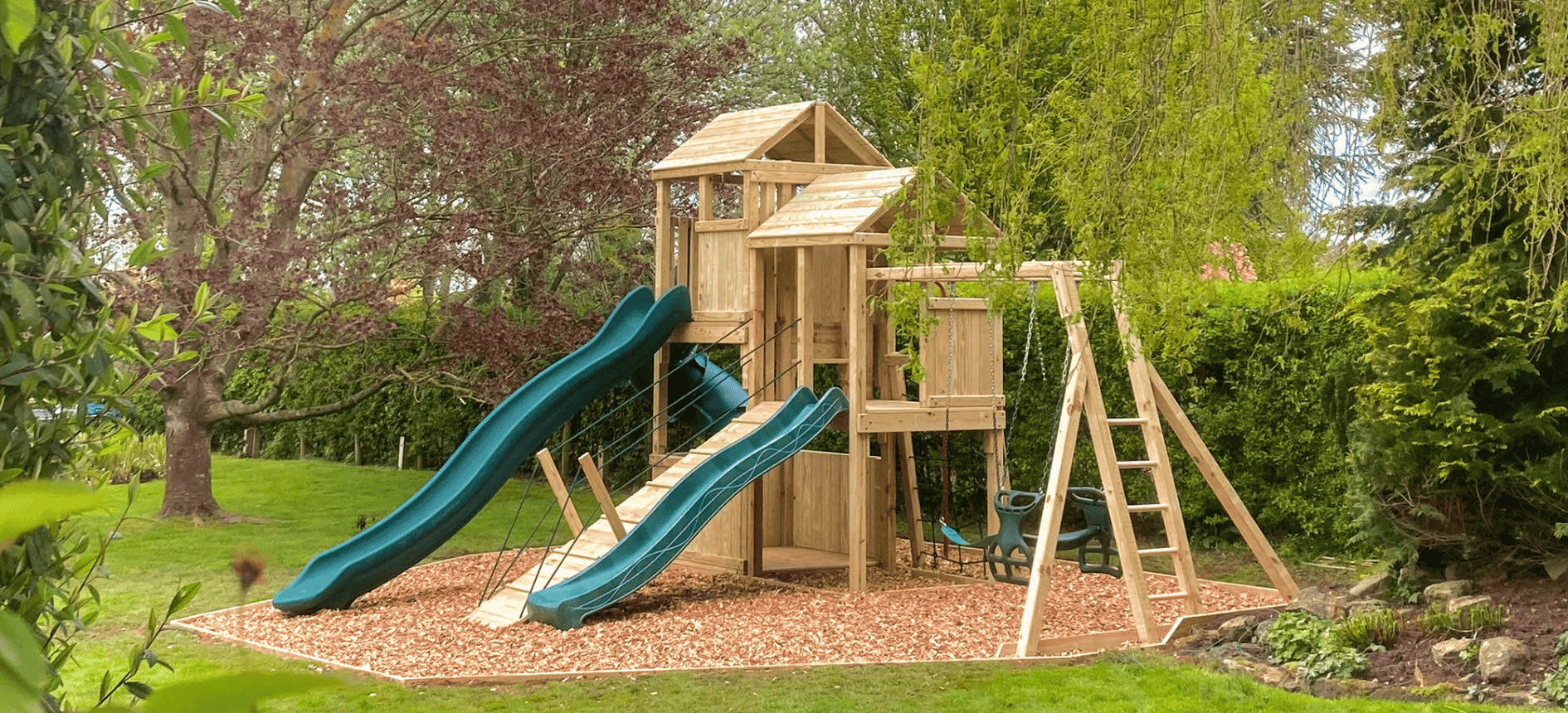
Today, slides are more than just equipment, they’re often an important part of imaginative play. From natural timber structures to themed designs like pirate ships, slides now play a key role in storytelling and adventure-led play environments.
They have also expanded beyond the traditional playground. Today, slides are seamlessly woven into treehouses and bespoke garden builds, incorporated into schools and public spaces, and even reimagined within homes and offices where they serve as playful architectural statements rather than just equipment.
Despite over a century of evolution, the core appeal of the slide hasn’t changed. It offers:
It’s this timeless combination that keeps children coming back again and again for the simple joy of the experience.
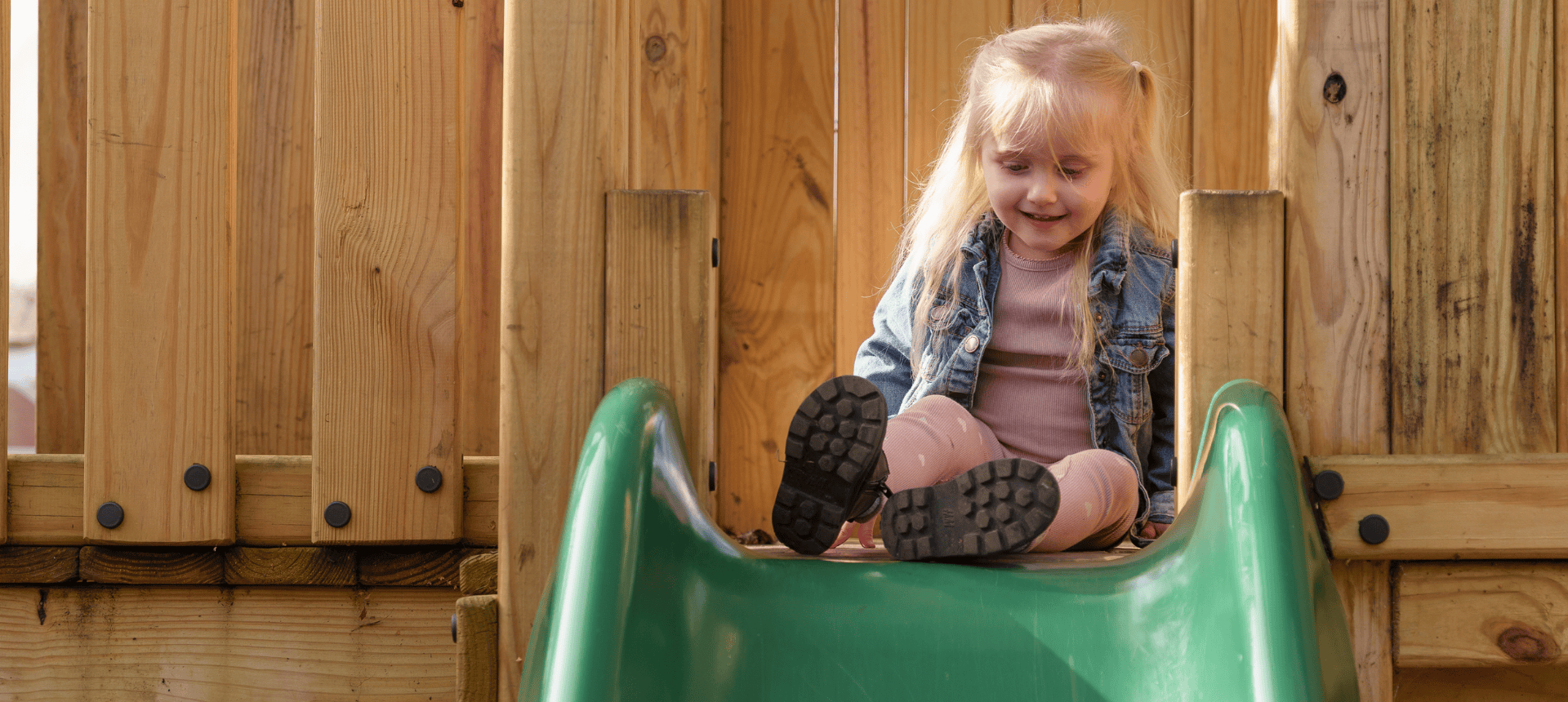
From castle turrets to custom-built playgrounds and garden climbing frames, the slide’s journey is one of subtle reinvention. Materials, shapes, and safety standards have all evolved, but the magic remains the same.
Climb up. Slide down. Do it again.
That’s the timeless language of play.
Research for this piece was informed by BBC, Bolder Play, SPI Plastics, and We Are Tricycle articles on the evolution of play.